Gig work and side hustles aren’t just trends – they’re defining shifts in how people work. What once felt like niche trends among the younger generations have become mainstream and are infiltrating workplace norms. From rideshare services, to freelance consulting gigs, to passion-projects, workers have re-written workplace rules once again, and the message is loud and clear: the 9-to-5 is optional; gig work and side hustles are here to stay.
Employers have voiced concerns over the shift, calling the new “fads” distractions leading to a lack of focus and withering loyalty in their employees – but are they truly the liabilities we’ve made them out to be? What if ignoring the potential advantages of this shift (for employees and employers) is the real danger? In other words: what if gig work and side hustles aren’t the enemy, but the new competitive edge?
Gig Work & Side Hustles 101: The New Ways to Work
The terms “side hustle” and “gig work” are often used interchangeably, but there are some clear distinctions. Not all gig work is a side hustle, and not all side hustles are gig work – but sometimes they are:
Gig Work: The “gig” is short-term, and workers are paid per task or project. They have some flexibility in the working arrangement to perform the work. Think of short-term independent/freelance contractors, consultants and consulting firms, ridesharing or delivery services, etc.
Side Hustles: Typically, side hustles are a more long-term engagement that happens in addition to a primary job/income source. Side hustles often allow people to grow and potentially transition their “side” hustle into their “main” hustle. Think of passion projects, small start-ups, entrepreneurial ventures, secondary jobs, etc.
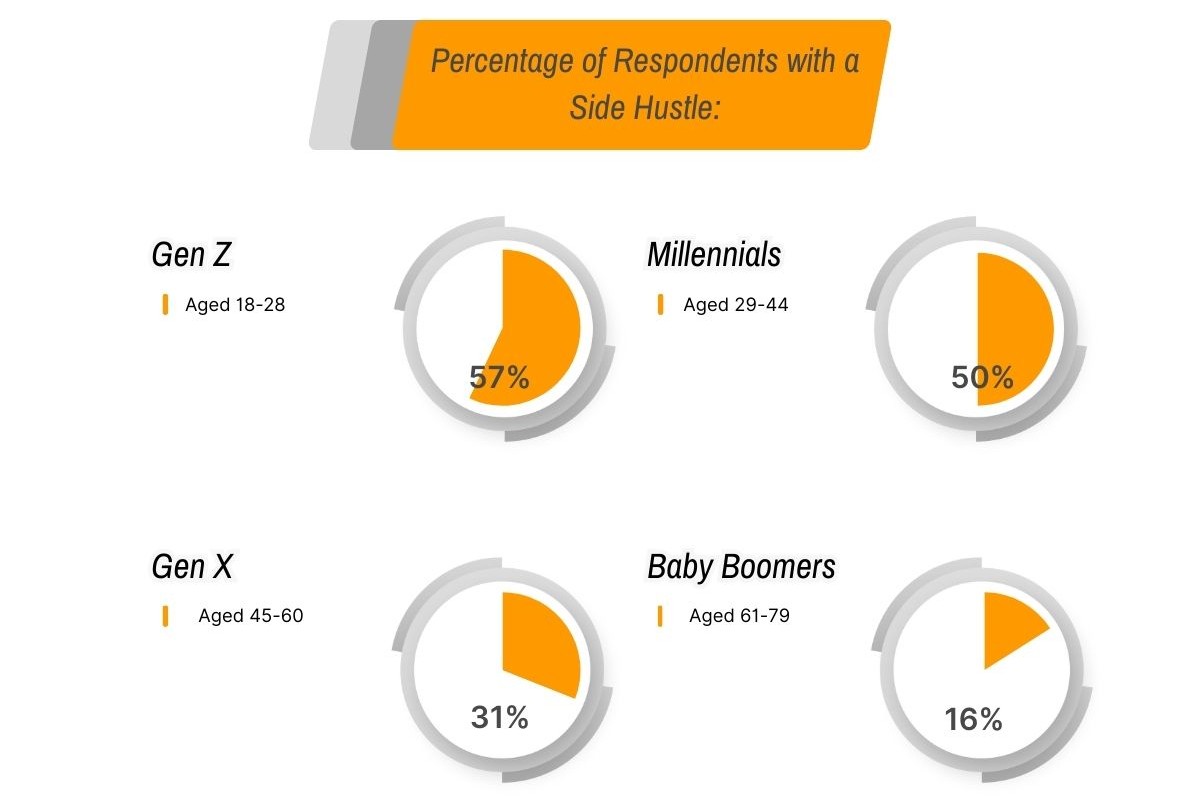
Both can be used as secondary income sources, and contrary to popular belief, they aren’t just for “youngsters.” Lending Tree’s 2025 Side Hustle Survey found that while younger generations may be more likely to have a secondary income source, all generations in our workforce are in on the game:
You might wonder: why are so many people seeking a side hustle?
Why Workers are Doubling Up
While the financial perks of juggling multiple jobs may be a main factor, there are a litany of reasons why side hustles and gig work are booming:
- Financial security – financial security remains a key motivator of employees seeking secondary income sources. Employees turn to secondary income sources for extra job security in an uncertain economy, but in many cases also as a lifeline to make ends meet. The 2026 State of Secondary Income in America Report from MyPerfectResume found that of the 1,000 American professionals surveyed, 72% rely on at least one form of secondary income and 53% expect to maintain that same level of secondary income in 2026. When looking at state-level data, the 2025 United Way of the Plains Asset, Limited, Income Constrained, Employed (ALICE) Report indicated that in 2023:
- 38% of households in Kansas were below the ALICE Threshold (the minimum average income needed by a household to afford basic costs).
- The ALICE Household Survival Budget (the minimum cost of household necessities plus taxes) for a single adult was $27,216 annually ($13.08/hour) and $68,712 annually ($33.03/hour) for a family of 4 (2 adults, 1 infant, and 1 preschooler).
- Of the 20 most common occupations in Kansas, 14 paid less than $41,600 annually ($20/hour); and of workers in these occupations, 29% lived in households below the ALICE Threshold.
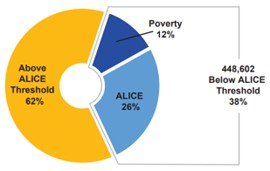
In an economy where multiple checks are required to get the bills paid, it’s no surprise employees are looking to maximize their income sources.
- Freedom and Flexibility – the 9-to-5 office grind just doesn’t cut it anymore with all workers. Among other benefits, the Institute of Leadership cited that the gig economy has opened doors towards greater flexibility and control for employees about where and when to work, especially for groups that seek more adaptability in their employment (e.g., working parents, younger generations, etc.). Recent graduates are taking an “out-with-the-old” approach and reshaping expectations for what the “average workplace” should look like. Monster Government Solution’s 2025 State of the Graduate Report found that of these graduates:
- 67% think '9 to 5' working hours are a thing of the past
- 64% think 5-day work weeks are outdated
- 59% think working full-time in an office is outdated
- 59% believe having to relocate for a job is an antiquated practice
With groups of workers tossing out conventional workplace norms, the “average workplace” has some stiff competition with gig work and side hustles.
-
Opportunities and Personal Fulfillment – gig work and side hustles also act as gateways to new skills and fresh opportunities that may not be available to employees in their primary roles. A Forbes article citing Aerotek’s 2025 Job Seeker Survey indicated that 83% of those seeking secondary employment do so as a way to learn new job skills and enter new industries. Opportunities to use untapped skills, the ability to work on various projects for diverse types of companies, and exposure to new opportunities are all potential benefits for individuals participating in the gig economy according to the Institute of Leadership. Success looks different today, and nontraditional working arrangements can pave the way for employees to discover opportunities that may not be offered by more traditional roles.
It's clear the gig economy is on a fast-track shift from exception to expectation, but the question is still on the table: why juggle multiple gigs rather than find a main hustle that can provide the same perks?
Hooked on the Hustle You Already Have
By unpacking the latest career trend, “job hugging,” it’s becoming clear that workers aren’t as keen to switch jobs as they might once have been. Forbes defines job hugging as “staying in a role even when it no longer feels like a great fit” and Korn Ferry attributes this shift in worker mindset to several factors including unpredictability in global events, the potential for AI disruption in the workforce, and an overall lower perception of the opportunities offered by the current job market. Citing the Employment Statistics Highlights report from the Bureau of Labor Statistics (BLS), Korn Ferry indicated that job-growth in the US had decelerated greatly in 2025 to just 73,000 jobs added in July as compared to the 111,000 monthly average seen earlier that year. This trend seemed to continue as the year progressed. CBS News’ most recent reporting, citing the Bureau of Labor Statistics’ latest Economic News Release, indicates that only 64,000 jobs were added in November, while 105,000 jobs were lost in October 2025. It would seem that the US isn’t just losing momentum on job creation – it’s actively cutting positions. The latest Challenger Report on Job Cuts, Restructurings, Closings, and the Economy found that through November of 2025, companies had announced 1,170,821 job cuts, which was 54% higher than the year before and the highest year-to-date level since 2020. Workers are taking heed and matching pace with the shifting labor market. Eagle Hill Consulting’s Employee Retention Index found that of the factors used to assess if employees will stay in their current roles over the next six months, Job Market Opportunity sentiment experienced the greatest loss in 2025 and hit the all-time lowest recorded level since the Index’s 2023 creation.
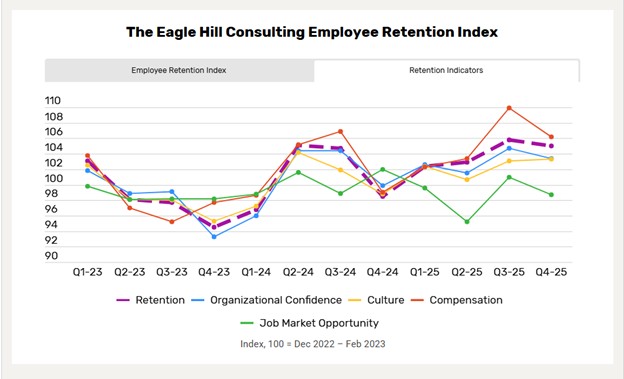
While employees may not be on the hunt to ditch their day jobs, their craving for security, flexibility, and opportunities can’t be curbed – so side hustles and gig work are here for the long haul. In a labor market rocked by constant shifts and uncertainty, employees and employers are scrambling to get what they need. As the rise of secondary income sources surges on, a question is looming in the background: in the battle between those clocking in and those signing the checks, who’s really winning and who’s just paying the price?
Perk or Problem? Depends on Who You Ask
Side hustles and gig work are often painted as a winning hand only for employees with the perks of extra cash, more freedom in shaping their work lives, and the opportunity to sharpen skills. But look closer, and it’s clear that employers aren’t walking away empty-handed. A hustling workforce can channel those sharpened skills back into the workplace and provide a more agile, motivated, and diverse pool of talent for employers. On the flip side, every perk has its price. The hustle can burn out and exhaust even the most motivated of employees while simultaneously creating concerns for their employers about focus and loyalty. Stack the pros and cons side by side and a new twist emerges: the hustle cuts both ways and the wins and losses look a lot alike.
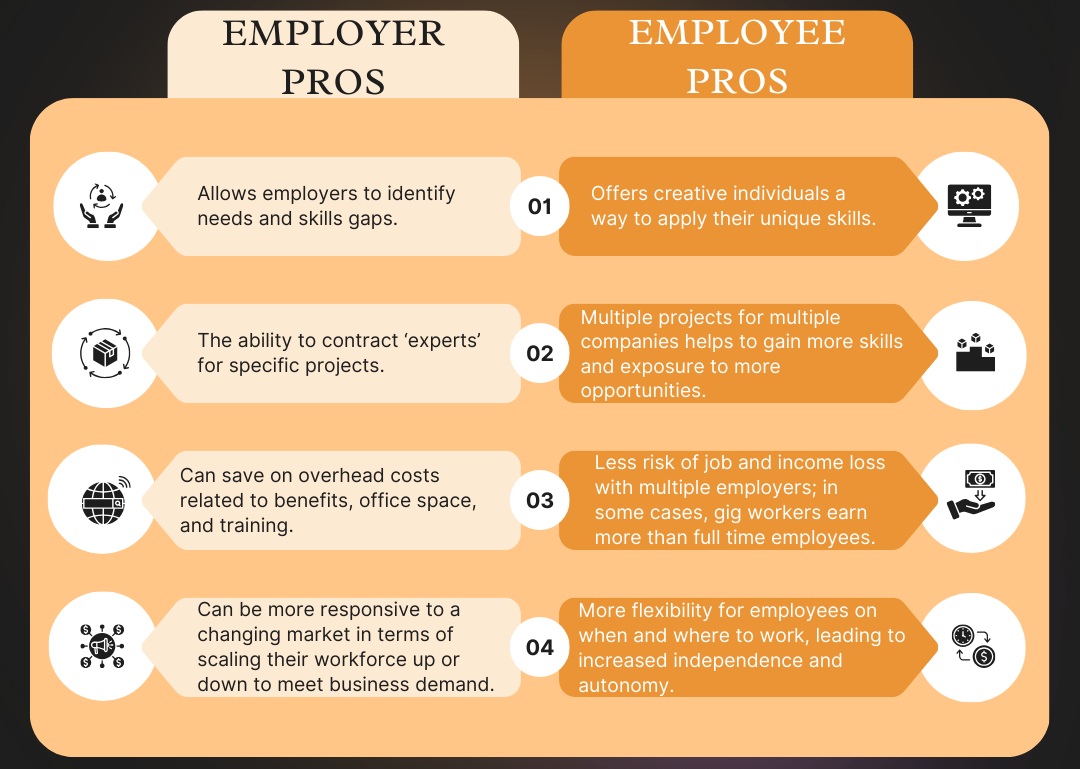
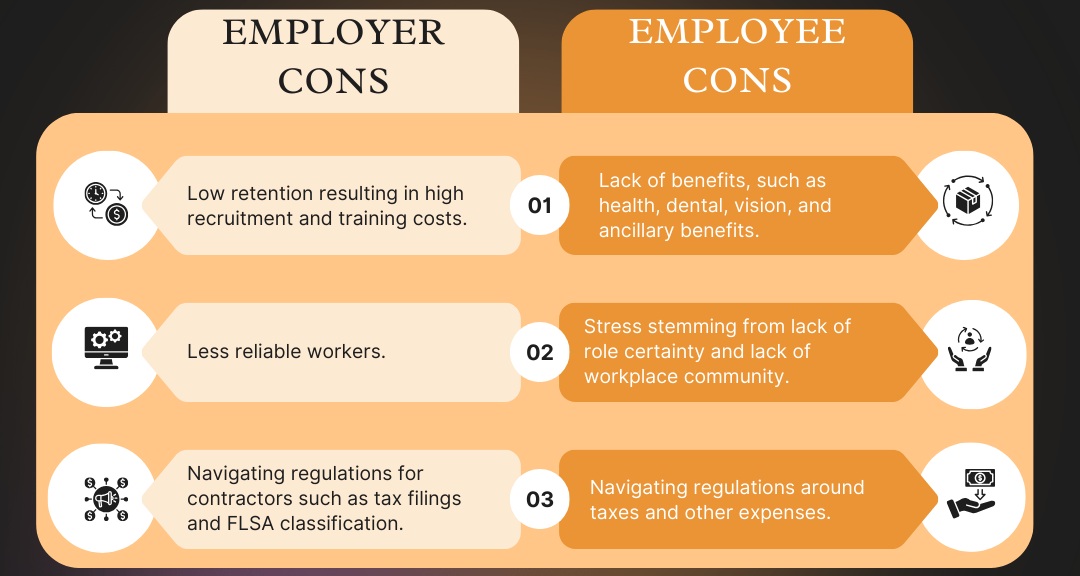
Sources for AGH created graphics: Western Governors University and The Institute of Leadership
Maybe side hustles and gig work aren’t the golden ticket employees thought they were, or maybe they truly can be a hidden competitive advantage for employers. Perspective is key, and whether secondary income sources are the right fit comes down to the specific circumstances of both employees and their employers. Which raises the most important question of all: can organizations turn gig work and side hustles into assets that work for them or are they better off sitting this trend out all together?
Should Your Organization Play the Hustle Game?
Game Prep
Regardless of whether your organization is ready to commit to the gig-economy, it may be helpful to get the pulse of your employees’ stance on the issue. Tools like anonymous surveys can provide valuable insight into whether your workforce is actively pursuing – or open to – secondary income streams without putting them in an uncomfortable spot with their managers. Understanding where your workforce stands can provide critical insight on how impactful this trend may be for your current employees. Additionally, this feedback can help highlight policy shifts that may be required, no matter if you’re embracing the hustling gig economy or resisting it.
Thriving in a gig economy starts with a choice: is your company in the game, or sitting it out? Some key factors to weigh when considering if your organization should partake in the hustle game include:
- Operational Alignment – Gig workers and side hustlers can be ideal for part-time and contract work; work that is short-term, requires less institutional knowledge, or is potentially project-based. It may be more difficult to use these types of workers in roles that require deeper integration in operations, a high degree of knowledge transfer to those taking on the role, or more collaboration with other staff. Evaluate which roles, functions, tasks, or positions in your organization could potentially be outsourced and which are better suited for full-time employees.
- Legal Compliance and Risk Management – It may be tempting to ditch employee overhead costs and use independent contractors or consultants as pinch hitters in the gig-economy, but there are some things to consider. Not every role will meet the Internal Revenue Service (IRS) and Department of Labor (DOL) criteria to be classified and paid as an independent contractor, and misclassifications can result in potential fines, lawsuits, and penalties for employers. Additionally, when using independent contractors, it is recommended to have clearly defined processes and rules for their scope of work, payment structure, confidentiality agreements, and enforcement of quality standards and deadlines. These are processes you’ll want to develop prior to engaging workers in these types of roles. Potentially, consulting firms may be an option to outsource the same work without running into the compliance risk of employee misclassification.
- Financial Impact and Control – While independent contractors, consultants, and part-time employees may alleviate some overhead costs to employers (e.g., benefits premiums, payroll taxes and unemployment insurance [independent contractors/consultants only], etc.), it’s important to also consider the costs of training these workers to be functional in their roles. Determine what the potential costs look like, factoring in things like onboarding costs, independent contractor/consultant rates, and administrative overhead costs for managing multiple contractors, consultants, or part-time staff. Evaluating the potential ROI is critical when determining if investing in these types of arrangements would be beneficial for your organization.
Game Play
Once you’ve determined if your organization is a player or spectator in the gig-economy, it’s time to align your internal strategies with your decision both on the home-front and external to your organization. Whether or not you choose to utilize gig-workers within your organization is a separate question from whether or not you allow your employees to hustle on the side. If your organization allows employees to seek secondary income sources, guidelines for how those arrangements are disclosed and the potential consequences for side hustles impacting work should be outlined clearly. Alternatively, if your organization would prefer employees refrain from having secondary income sources, that messaging and the consequences for doing so should also be clearly communicated in policy.
If your organization chooses to embrace gig workers and side hustlers in employment arrangements, it will be critical to manage and monitor these working relationships. Your HR function will need to verify:
- The right type of arrangement is selected. Independent contractors and part-time employees require different compliance obligations than consulting firms. Consider if utilizing consulting firms allows the same work to be outsourced without running the risk of employee misclassification.
- Compliant pay and benefit access, as required by law.
- The scope of working arrangements progresses in a way where workers are correctly classified (if using independent contractors or part-time employees).
- The working arrangement allows the flexibility needed to avoid coverage gaps and complete projects by required deadlines.
- Appropriate documentation is in place and sensitive and confidential information is safeguarded.
- The quality and output of the work meets the needs of the organization.
The gig economy requires processes to verify that the arrangements are working well for your organization, but monitoring the ROI can help determine if this should be a long-term strategy for your organization.
If your organization chooses to stay on the sidelines of the gig economy and prefers second gigs stay off the table for your current employees, the strategy may need to shift to support employee security and engagement. Consider the following:
- Are there ways to integrate additional flexibility into current roles and scheduling? If employees crave more say in when and how they work, there are potential strategies to provide this to employees within the roles they already have (e.g., remote/hybrid work, flex scheduling, staggered/split shifts, etc.).
- Does your total compensation strategy allow employees the financial security needed to rely on their primary job to meet their financial needs? If not, this may indicate that the strategy does not align with employee needs, and services such as compensation and benefit reviews could be beneficial.
- Are career pathways and professional development opportunities aligned with employee expectations and desires? If employees wish to develop skills and explore career opportunities, organizations can utilize services like professional development programs, coaching, and lateral and management training to develop employees and enable them to take on new opportunities.
At the end of the day, gig work and side hustles may not be a solution for every employer or role, but they are sticking around. Will your organization harness the potential advantages of the workforce trend, or resist? Either way, it is important for your organization to make an informed decision that drives workforce strategy. Is the gig economy a gamble, or an absolute workplace gamechanger? It depends on how your organization chooses to play.
For a deeper discussion on the opportunities, challenges, and potential strategies that could strengthen your organization, connect with the consultants below:

Vice President
HR & Org. Development Services
Email us

Kelli Sturm
Consultant
HR & Org. Development Services
Email us

Sidney Dreifort
Associate
HR & Org. Development Services
Email us